Choosing a Cable Gland For Flat Cable requires more than matching a hole diameter. Flat cables vary in width, thickness, insulation, flexibility, and operating environment. A gland that fits neatly in a workshop may fail beside a vibrating motor or a hot enclosure.
Cable-entry specialist Sarah Bennett states, “A flat cable needs controlled sealing, gentle strain relief, and enough space to breathe.” That principle guides this 2026 review. Each product is considered for cable compatibility, IP protection, material quality, installation effort, and long-term stability. Small details matter. A sharp sealing edge can damage insulation. Excessive compression can flatten conductors. Poor clamping may allow water to follow the cable into an enclosure.
The seven options examined here serve different situations. Some suit compact control cabinets. Others handle outdoor equipment, industrial automation, or high-flexibility installations. Polyamide models can reduce cost and weight. Nickel-plated brass glands may offer stronger mechanical protection. Stainless steel remains attractive where corrosion, cleaning, or harsh exposure is expected.
No selection is perfect.
A practical buyer should measure the cable first. Record its width and thickness, then check the manufacturer’s sealing range. Review temperature limits, enclosure material, mounting-thread size, and available strain relief. EMC performance also deserves attention when shielded cables carry sensitive signals. Product labels can look reassuring, but field conditions are less forgiving. Dust, oil, movement, and repeated bending expose weak designs quickly.
This guide compares seven leading choices for 2026. It aims to make the decision clearer, while acknowledging one uncomfortable truth: installation quality can matter as much as the gland itself.
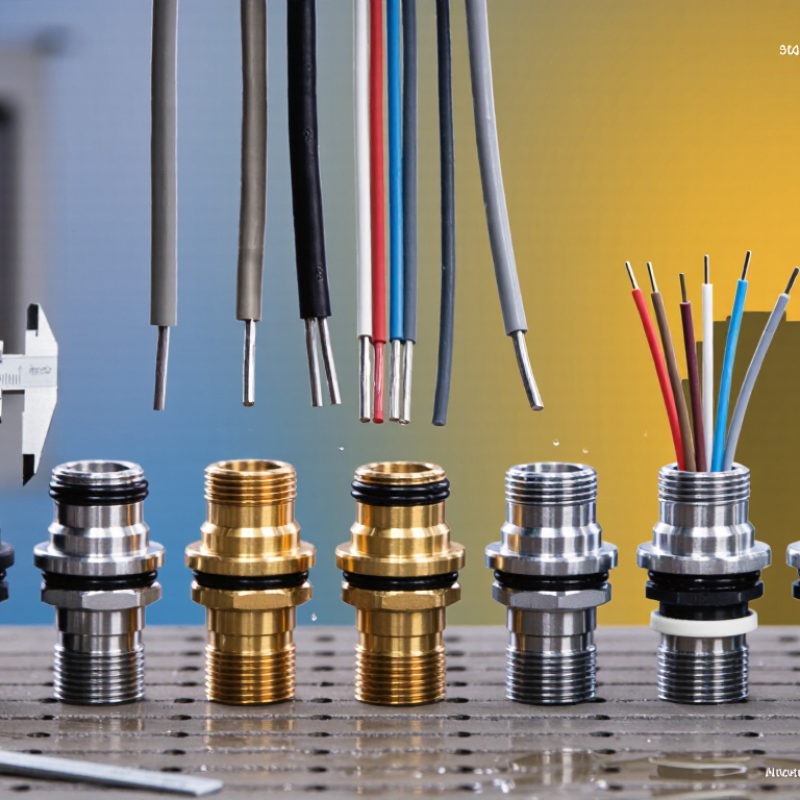
Flat cable glands seal the point where a flat cable enters an enclosure, panel, or junction box. Their main job is simple: hold the cable firmly while blocking dust, moisture, and accidental pulling. Unlike round cable glands, they use a shaped sealing insert that matches the cable’s width and thickness. A correct fit prevents exposed gaps along the cable edges.
In field installations, I check the cable dimensions with a caliper before choosing a gland. Small errors matter. An oversized opening can let water pass during heavy rain, while excessive compression may damage the cable jacket. Materials also affect protection. Nylon suits many indoor panels, while corrosion-resistant metal can help in outdoor or vibration-prone equipment. The enclosure’s wall thickness, entry direction, and required ingress rating deserve equal attention. I once treated the rating as the whole answer. That was too narrow; installation quality mattered just as much.
Tips: Measure the cable after it is fully assembled. Check its widest section, not only the printed specification. Keep the sealing insert clean and free from cuts. Tighten the locknut evenly, but do not crush the cable. For outdoor use, inspect the seal after temperature changes, because materials expand and contract. Flat cables also bend differently from round cables, so leave a gentle service loop near the entry. Neat routing helps. It also exposes mistakes sooner.
Flat cable glands protect cable entries from dust and water. The chart below compares the protection levels defined by IEC 60529. Higher values indicate a higher tested protection level, while the two digits in an IP code represent solid-particle and water protection separately.
When comparing flat cable glands, start with cable geometry, not price. A round gland can pinch a ribbon cable and damage its insulation. Measure width, thickness, bend radius, and jacket material before ordering. The sealing range must match the cable without forcing it through the opening. Look for an adjustable seal that distributes pressure across the flat surface. Uneven compression creates a small water path. It happens more often than expected. IEC 60529 defines IP protection levels, but the rating applies only to a correctly installed assembly. According to the 2024 MarketsandMarkets Cable Glands Market report, the global market was estimated at about USD 2.3 billion in 2023. That growth reflects wider demand for reliable cable entry systems, not proof that every gland suits flat cable.
Material selection deserves equal attention. Nickel-plated metal offers strong mechanical protection, while engineered polymers reduce weight and corrosion concerns. Check operating temperature, ultraviolet exposure, chemical contact, and vibration levels. IEC 62444 provides a useful framework for cable gland construction and testing. For outdoor panels, compare the stated IP rating, strain-relief performance, and gasket aging data. For moving equipment, inspect bending tests instead of trusting appearance. A gland may look robust yet fail after repeated flexing. I have seen installation teams overlook the cable’s minimum bend radius, then blame the seal. That diagnosis is often incomplete. Ask for test conditions, salt-spray results, and torque guidance. Vague specifications should slow the purchase, not speed it.
The best flat cable gland depends on the installation, not appearance. This shortlist covers seven practical options: compact nylon for indoor control panels, UV-resistant polymer for exposed walls, IP68 compression glands for wet areas, EMC glands for shielded systems, high-temperature glands for machinery, heavy-duty glands for vibration, and split glands for retrofit work. Choose a rectangular sealing insert whenever possible. A round gland can pinch flat cable edges.
Grand View Research’s 2024 cable-gland market analysis projects annual growth above 6% through 2030. That growth reflects rising demands for safer cable entry systems. However, market growth does not guarantee a correct fit. Check cable width, thickness, bend radius, and outer jacket material. IEC 62444 offers guidance for cable-gland selection and installation. IEC 60529 confirms the meaning of IP ratings. IP68 sounds strong, but only when the gland, cable, and enclosure work together.
Tips: Measure the cable twice. Leave a small service loop. Tighten the sealing nut to the manufacturer’s torque range. Test the seal after installation, especially outdoors. I would not rank one gland as universally best. Temperature, dust, movement, and maintenance access can change the decision. Split glands save time during upgrades, but their seals may need more frequent inspection. A neat installation can still be technically weak. Проверяется by testing, not appearance.
How to Choose the Right Flat Cable Gland for Your Application
Choosing a flat cable gland starts with the cable, not the enclosure. Measure the cable width, thickness, jacket hardness, and minimum bend radius. A neat fit is not always a safe fit. I would avoid relying on width alone. Compression can deform a thin jacket and weaken sealing performance. Grand View Research’s 2024 cable glands market analysis forecasts annual growth above 6% through 2030. That expansion reflects rising demand for reliable cable entry systems in industrial equipment, automation, and energy projects.
Check the gland’s clamping range against the cable’s actual dimensions. Allow limited tolerance for manufacturing variation. Then verify the required ingress rating under IEC 60529, such as IP65, IP66, or IP68. The rating applies to the complete installed assembly, not only the gland body. Installation matters greatly. IEC 62444 also provides guidance for cable gland construction, mechanical performance, and testing. A poorly cut enclosure can still cause leakage.
Material selection depends on the environment. Use corrosion-resistant metal for outdoor or chemical areas, and suitable engineering polymer for lighter installations. Confirm operating temperature, ultraviolet exposure, vibration, and strain-relief needs. EMC performance may require shielding continuity around the entry point. Do not ignore service access. A gland that seals well but damages the cable during replacement is a poor choice. Manufacturer test data should identify torque values, cable ranges, and test conditions. Reports often simplify field conditions; real installations rarely do.
| No. | Flat Cable Gland Type | Typical Cable Profile | Typical Protection Rating | Common Body Material | Temperature Range* | Key Advantages | Best For | Main Selection Check |
|---|---|---|---|---|---|---|---|---|
| 1 | Compact Nylon Flat-Cable Gland | One flat cable; approximately 3–8 mm thick and 8–15 mm wide | IP54–IP68, depending on sealing design and installation | Glass-fiber-reinforced polyamide | -40°C to +100°C | Lightweight, corrosion-resistant, economical, and quick to install | Control panels, sensors, small machinery, and indoor equipment | Confirm that the sealing insert matches both cable thickness and width; do not rely on diameter alone. |
| 2 | Heavy-Duty Polyamide Flat-Cable Gland | One or more flat cables; approximately 5–12 mm thick and 12–25 mm wide | IP66–IP68; some designs can achieve IP69K when correctly installed | Reinforced polyamide with elastomer sealing insert | -40°C to +100°C | Good impact resistance, strong strain relief, and reliable outdoor performance | Industrial automation, outdoor enclosures, and machine tools | Check impact rating, locknut compatibility, and the enclosure wall thickness. |
| 3 | Metal Flat-Cable Gland | Flat power or control cable; approximately 6–15 mm thick and 15–35 mm wide | IP66–IP68, subject to the insert and cable construction | Nickel-plated brass or stainless steel | -60°C to +100°C for many standard configurations | High mechanical strength, effective heat dissipation, and strong resistance to vibration | Heavy machinery, transport equipment, and demanding industrial environments | Use stainless steel where salt spray, chemicals, or washdown exposure may cause corrosion. |
| 4 | EMC Flat-Cable Gland | Shielded flat cable; approximately 4–12 mm thick and 10–30 mm wide | IP54–IP68, depending on the shielding and sealing arrangement | Nickel-plated brass or conductive metal alloy | -40°C to +100°C | Combines cable sealing with a 360-degree shield-contact path to reduce electromagnetic interference | Variable-speed drives, data systems, robotics, and industrial control cabinets | Verify shield diameter, contact method, grounding continuity, and cable bend radius. |
| 5 | Split Flat-Cable Gland | Pre-terminated flat cable or connectorized cable; approximately 4–10 mm thick and 10–25 mm wide | IP54–IP66; higher ratings require a tested split-seal system | Polyamide, thermoplastic elastomer, or aluminum housing | -40°C to +80°C | Can be fitted without removing an existing connector, reducing downtime during retrofit work | Service upgrades, repair work, temporary installations, and prewired cabinets | Check whether the split line is designed for the required ingress rating and cable movement. |
| 6 | Multi-Entry Flat-Cable Gland | Two or more flat cables; typically 3–10 mm thick per cable and 8–25 mm wide per cable | IP54–IP68, depending on the number of cable openings and insert design | Polyamide or nickel-plated brass | -40°C to +100°C | Saves enclosure space and reduces the number of drilled entries and locknuts | Junction boxes, control panels, instrumentation, and compact electrical cabinets | Calculate the total cable fill, spacing between entries, and sealing compression for every cable. |
| 7 | High-Temperature Silicone-Sealed Flat-Cable Gland | Flat cable exposed to elevated heat; approximately 5–15 mm thick and 12–35 mm wide | IP66–IP68 when matched with a compatible enclosure and sealing insert | Metal or high-temperature polyamide with silicone or fluorosilicone seal | -60°C to +180°C, depending on the seal and cable jacket | Maintains sealing performance across wide temperature changes and reduces hardening of the seal | Ovens, heating equipment, engine compartments, and high-temperature process machinery | Confirm the continuous temperature rating of the gland, seal, cable jacket, and enclosure together. |
| Important: Protection ratings, dimensions, and temperature ranges are typical selection values rather than universal specifications. Always verify the manufacturer’s test standard, cable construction, sealing range, thread type, enclosure thickness, torque requirement, and installation instructions before final approval. | ||||||||
For the seven best flat-cable glands in 2026, installation quality matters as much as gland design. Measure the cable width and thickness before selecting a model. A round-cable gland may compress unevenly and leave open channels. Check the manufacturer’s dimensional chart carefully. Small errors become large sealing problems.
Clean the enclosure surface before fitting the gland. Remove dust, oil, and sharp burrs around the entry hole. Feed the cable without twisting it. Keep its natural bending radius outside the enclosure. Tighten the locknut with a calibrated torque tool when possible. Too little torque allows movement. Too much torque can crush the cable or deform the seal. Follow the supplied instructions and verify the required ingress rating for the installation.
A reliable seal should remain stable during vibration, temperature changes, and repeated maintenance. Inspect the gasket for cuts, hardening, or flattening during scheduled service. Look for moisture trails inside the enclosure. That small clue often appears before equipment failure. Replace damaged seals instead of adding unapproved sealant. I once treated a minor compression mark as harmless; the cable later shifted under vibration. That mistake changed my inspection routine. Recheck the gland after the first operating cycle, especially outdoors or near machinery. Record the cable size, tightening torque, inspection date, and observed condition. Good records expose patterns that memory misses.
Measure the cable width, thickness, bend radius, and jacket material. A round opening may pinch the cable edges. Measure twice.
Choose an adjustable or rectangular sealing insert. It should distribute pressure across the cable’s flat surface. Uneven compression can create a hidden water path.
No. The rating applies to a correctly installed assembly. The gland, cable, enclosure, and seal must work together. Test the seal outdoors.
Plated metal provides strong mechanical protection. Engineered polymers reduce weight and corrosion concerns. Consider temperature, ultraviolet exposure, chemicals, and vibration before deciding.
Use a gland with suitable ultraviolet resistance and a tested IP rating. Check gasket aging data and strain-relief performance. A dry panel today proves little.
Inspect bending-test results and confirm the cable’s minimum bend radius. Repeated flexing can weaken a gland that looks strong. Looks can mislead.
Yes, split glands allow installation without removing existing cables. Their seals may require more frequent inspection. Convenient, but not flawless.
Leave a small service loop and follow the stated torque range. Check that the seal compresses evenly without forcing the cable. Then test for leakage and movement. I might blame the gland too quickly.
This guide explores seven practical options for choosing a Cable Gland For Flat Cable in 2026. Flat cable glands are designed to secure, seal, and protect flat or ribbon-style cables where they pass through panels, enclosures, or equipment walls. By reducing movement and blocking dust, moisture, and other contaminants, they help improve connection reliability and extend cable service life. The article also explains key comparison points, including cable compatibility, sealing performance, material durability, environmental resistance, installation method, and strain relief.
The seven recommended solutions are organized around different installation needs, such as indoor equipment, outdoor enclosures, compact panels, harsh environments, and applications requiring frequent maintenance. Readers will learn how to match gland dimensions and protection ratings to their specific cable and operating conditions. Proper installation, including accurate sizing, clean surfaces, correct tightening, and periodic inspection, is also covered to help maintain a secure seal and dependable long-term performance.

Hongxiang