Choosing a China Top Pg29 Cable Gland Manufacturer and Supplier requires more than comparing prices. A reliable supplier should understand cable diameter, enclosure thickness, thread compatibility, sealing performance, and installation conditions. The Pg29 Cable Gland must hold the cable firmly without damaging its outer jacket. Small details matter.
Cable-entry engineer Michael R. Lane states, “A gland is only as reliable as its seal, thread, and installation discipline.” This practical view reflects real factory experience. During inspection, buyers should check the locking nut, sealing ring, body finish, and strain-relief structure. Nylon glands suit many lightweight applications. Nickel-plated brass versions provide stronger mechanical resistance. Stainless steel may serve harsh outdoor or corrosive environments.
Ask for material certificates, dimensional drawings, IP test evidence, and production samples. Do not trust a polished catalog alone. A supplier may claim excellent sealing, yet inconsistent molding can create leakage around the cable. That possibility deserves attention. Verify the actual cable range, operating temperature, thread standard, and packaging quality before placing a large order.
China has many capable manufacturers, but quality varies between factories. Some provide engineering support, private labeling, and flexible minimum order quantities. Others mainly compete on cost. The better choice combines stable production, clear communication, repeatable testing, and honest technical limits. No supplier is perfect. That is why this guide compares manufacturing experience, product construction, inspection practices, customization options, and after-sales reliability when identifying a dependable Pg29 Cable Gland partner.
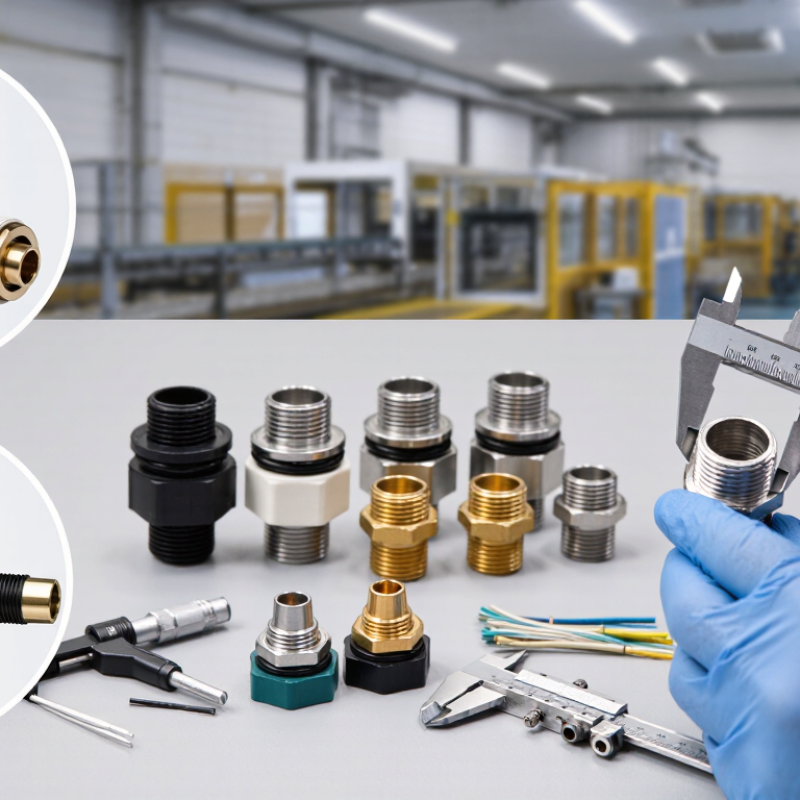
A PG29 cable gland is a mechanical entry fitting for securing and sealing cables through an enclosure wall. “PG” refers to the older Panzergewinde thread system. The number identifies the nominal size.
A typical PG29 thread has a 37 mm major diameter and an approximately 1.6 mm pitch.
Its sealing insert commonly accepts cables between 18 and 25 mm. The exact range depends on the insert design. Measure the cable first.
Under IEC 62444, glands are assessed for retention, mechanical strength, and sealing performance. IEC 60529 defines enclosure IP ratings.
A correctly installed PG29 entry can support an IP66 enclosure, which resists dust and powerful water jets under specified tests. IP68 requires agreed immersion conditions. There is no universal depth or duration. That detail is often missed.
Polyamide suits lighter equipment, while plated metal or stainless steel handles greater mechanical stress and corrosion exposure.
The International Renewable Energy Agency reported 473 GW of renewable capacity additions in its Renewable Capacity Statistics 2024. This expansion increases demand for sealed cable entries in outdoor electrical equipment.
Several 2024 cable-management market outlooks also estimate annual growth near 6% through 2030. Forecasts vary by region and product definition.
A practical specification should list thread dimensions, cable range, gasket material, torque guidance, and test evidence. A supplier may look credible. The drawing and test record matter more.
When evaluating a China PG29 cable gland manufacturer or supplier, focus on measurable specifications rather than broad sales claims. A standard PG29 gland commonly suits cables around 18–25 mm in diameter, but the exact range can vary by design. Confirm the usable diameter from the technical datasheet.
Thread compatibility also matters. PG29 glands usually use a PG thread, with thread length selected for the enclosure wall thickness. Check the panel hole, thread pitch, locknut, and washer before ordering. A small mismatch may prevent proper sealing. It happens more often than expected.
Material selection affects service life. PA66 nylon is lightweight, electrically insulating, and suitable for many indoor control cabinets. Nickel-plated brass provides greater mechanical strength for machinery, outdoor boxes, and repeated cable movement. Sealing parts may use EPDM or NBR rubber, depending on temperature, oil, and weather exposure.
Ask for the operating temperature range, impact rating, flame behavior, and ingress protection test basis. IP68 is meaningful only when the gland, cable, and enclosure are installed correctly. A rating alone proves little.
I inspect the compression seal around a sample cable, not just the printed size. The seal should close evenly without crushing the jacket.
One overlooked detail is strain relief. A heavy cable can pull against the gland for months. Supplier quality records, material certificates, dimensional drawings, and batch inspection reports make purchasing more reliable. No component is perfect; field conditions should challenge the specification before production approval.
Choosing a reliable China PG29 cable gland manufacturer requires more than comparing unit prices. Grand View Research reported that the global cable glands market was valued at approximately USD 2.1 billion in 2023, with industrial and infrastructure demand supporting continued growth. This expansion also attracts inconsistent suppliers. Buyers should request a current product datasheet, factory address, material declaration, and batch-level inspection records.
Small details matter.
Check the actual cable diameter range, thread dimensions, sealing performance, and operating temperature. PG29 is not automatically identical across every supplier. Confirm measurements against your enclosure drawing. Ask for IP testing based on IEC 60529, especially when equipment faces dust or water.
ISO 9001 certification helps, but it does not prove every gland is reliable. That distinction is often missed. A manufacturer should provide test reports from an identifiable laboratory, not only a self-made certificate.
Samples should be tested with the intended cable, locknut, and enclosure thickness. A quotation can look attractive and still hide poor sealing. Request production photos, incoming-material controls, and a traceable lot number.
Some suppliers answer quickly but avoid technical questions. Treat that as a warning.
I would also review packaging strength, replacement procedures, and communication after delivery. No supplier is perfect, and even experienced buyers can overlook thread compatibility. Clear drawings and a small pilot order reduce that risk.
PG29 cable glands require more than accurate molding and a clean finish. Manufacturing should follow IEC 62444, which defines mechanical, environmental, and sealing performance for cable glands. The PG29 thread must be checked with calibrated gauges, while body diameter, pitch, locknut fit, and cable clamping range require documented inspection. A small thread error can weaken installation security.
Quality control must continue beyond dimensional checks. Production teams should test tightening torque, tensile resistance, seal compression, and enclosure protection under IEC 60529. IP testing uses controlled dust and water exposure, not visual judgment. Samples should also face temperature cycling and material verification, especially when polyamide or plated metal parts are used. The ISO Survey 2023 recorded over 1.2 million ISO 9001 certificates worldwide, showing how widely documented quality systems support manufacturing consistency.
Records matter. Each batch should link raw materials, mold settings, operator checks, and final test results to a traceable code. In practical inspections, inconsistent washer thickness or uneven rubber hardness can cause leakage, even when the gland looks acceptable. That is easy to miss. A certificate alone is not proof of stable production. Manufacturers should review failed samples openly, because one overlooked tolerance may repeat across thousands of PG29 cable glands. Calibration schedules, retained samples, and corrective-action reports make supplier evaluation more reliable.
The chart presents the numerical protection levels defined by IEC 60529 for dust and water ingress testing. For PG29 cable-gland quality control, manufacturers commonly verify the declared IP rating, thread dimensions, sealing performance, material conformity, and mechanical retention in accordance with the applicable product drawing and test requirements.
PG29 reference dimensions: nominal thread major diameter 37.0 mm and nominal thread pitch 1.588 mm. IPX7 represents temporary immersion up to 1 m for 30 minutes under IEC 60529 test conditions; IPX8 applies to continuous immersion under conditions specified by the manufacturer and testing agreement.
PG29 Cable Gland Applications, Installation, and Supplier Evaluation Criteria
PG29 cable glands suit control cabinets, outdoor junction boxes, pumps, and industrial machinery. They secure large cables while limiting dust and moisture entry. Select the gland by cable diameter, thread type, enclosure thickness, and environmental exposure. Do not assume every PG29 model fits the same cable range. Check the supplier’s current datasheet.
During installation, measure the cable outer diameter at several points. Remove sharp edges from the enclosure hole. Insert the gland, add the correct sealing washer, and tighten the locknut evenly. Feed the cable without twisting it. Tighten the cap until the seal grips firmly, but avoid crushing the cable jacket. A simple pull test helps confirm strain relief. Inspect the seal after temperature cycling when the equipment operates outdoors.
Supplier evaluation needs more than a low quotation. Request material details, IP test evidence, temperature ratings, thread dimensions, and production inspection records. Reliable manufacturers should provide samples before bulk production. Confirm cable-range tolerance, packaging quality, lead time, and replacement procedures in writing. Traceable batch numbers are useful when field problems appear. Ask how the supplier controls sealing rings and thread accuracy.
I still see buyers comparing only unit prices. That approach often misses installation labor and early failures. A perfect-looking gland can perform poorly when its seal is poorly stored. Review sample results, not promises. Clear technical communication matters. Supplier reliability is proven over time.
| Data Dimension | PG29 Cable Gland Information | Practical Application or Evaluation Point | Reference or Verification Method |
|---|---|---|---|
| Product Type | PG29 is a cable gland size based on the traditional Panzergewinde thread system. It is commonly used to secure, seal, and protect cables entering an electrical enclosure. | Confirm that the enclosure entry thread and the cable gland thread are both PG29 before ordering. | Check the technical drawing, thread designation, and sample fit. |
| Nominal Thread | The nominal outside thread diameter for a PG29 thread is approximately 37 mm. PG threads use a fine pitch system traditionally specified in threads per inch. | Do not substitute a metric M37 thread without confirming compatibility; the thread profiles and pitch are different. | Verify the thread standard and measure the thread with suitable inspection equipment. |
| Cable Diameter | The usable cable diameter range is not fixed by the PG29 designation. It depends on the gland body, sealing insert, and product design. | Select a model whose stated clamping range covers the actual cable outside diameter, including manufacturing tolerance. | Compare the supplier datasheet with the measured cable diameter. |
| Common Materials | Common construction options include nickel-plated brass, stainless steel, polyamide, and other engineering plastics. Material selection affects corrosion resistance, strength, temperature performance, and electrical continuity. | Use corrosion-resistant metal for demanding industrial or outdoor environments; use plastic where insulation, light weight, or chemical compatibility is required. | Request the material specification, plating description, and relevant test documentation. |
| Ingress Protection | Protection levels such as IP54, IP65, IP66, IP67, and IP68 describe resistance to dust and water ingress under defined test conditions. The final rating depends on the complete gland, seal, cable, enclosure, and installation. | For outdoor or washdown applications, select the required IP level and ensure the cable diameter fits the sealing range. | Check test reports or declarations referencing IEC 60529. |
| Temperature Performance | Operating temperature limits vary by sealing material, body material, and construction. Common sealing materials include elastomers such as NBR, EPDM, and silicone, each with different resistance characteristics. | Match the gland to the minimum and maximum ambient temperature, cable temperature, UV exposure, oils, and chemicals. | Review the supplier's temperature range and media-compatibility information. |
| Typical Applications | PG29 cable glands may be used on control cabinets, switchgear, industrial machinery, automation equipment, junction boxes, instrumentation panels, and electrical enclosures. | Use only a design with suitable environmental, mechanical, and electrical performance for the installation location. | Compare the application conditions with the product specification and applicable equipment standard. |
| Outdoor Use | Outdoor installations may expose the gland to rain, dust, sunlight, temperature cycling, vibration, and corrosion. | Confirm UV resistance, water-ingress protection, corrosion resistance, and strain-relief performance rather than relying on the PG29 size alone. | Request outdoor aging, corrosion, and ingress-protection evidence where required. |
| Armoured Cable Use | Armoured cable glands require a design that provides appropriate armour clamping, earth continuity, mechanical retention, and environmental sealing. | Do not use a standard unarmoured gland for an armoured cable unless the design specifically supports that cable construction. | Confirm cable type, armour arrangement, gland type, and installation instructions. |
| EMC Applications | EMC cable glands are designed to provide cable shielding termination or electromagnetic bonding when correctly installed with compatible shielded cables and equipment. | Evaluate shield-contact design, bonding path, resistance, and compatibility with the enclosure's earthing arrangement. | Request EMC test information and installation instructions for shield termination. |
| Hazardous Areas | Installations in explosive atmospheres require appropriately certified cable glands and correct installation according to the equipment protection concept. | A normal IP-rated PG29 gland is not automatically suitable for hazardous-area use. | Verify the applicable certification, marking, installation conditions, and regional requirements. |
| Installation Preparation | Before installation, verify the enclosure thread, cable outside diameter, gland components, sealing ring, locknut, earth accessories, and required tools. | Keep sealing surfaces clean and remove burrs or sharp edges that could damage the seal or cable jacket. | Use the approved installation drawing and the supplier's component checklist. |
| Installation Sequence | Typical installation involves passing the cable through the gland, fitting the gland into the enclosure, seating the seal, and tightening the compression component to secure the cable. | Follow the product-specific sequence because multi-part, armoured, and EMC glands may require different assembly steps. | Use the manufacturer's installation instructions for the exact model. |
| Tightening Control | Excessive tightening can damage the seal or cable jacket, while insufficient tightening can reduce retention and ingress protection. | Use the specified tightening torque where provided and confirm that the cable is securely retained without deformation. | Check the installation manual and use a calibrated torque tool when torque values are specified. |
| Panel Entry | The enclosure entry must be correctly sized, aligned, and free from burrs. A locknut, sealing washer, or thread seal may be required depending on the enclosure and gland design. | Confirm the actual panel thickness and whether the gland requires a washer or additional sealing accessory. | Compare the enclosure drawing with the gland dimensional drawing. |
| Mechanical Performance | A cable gland can provide strain relief and help prevent cable movement, twisting, or pull-out at the enclosure entry. | Evaluate retention performance for static cables, flexible cables, vibration, and repeated movement as applicable. | Review retention, pull-out, vibration, and mechanical test data. |
| Applicable Standard | IEC 62444 provides general requirements and tests for cable glands used with electrical installations and equipment. IEC 60529 is commonly used for enclosure ingress-protection classifications. | Use standards as part of the technical assessment, while also checking the requirements of the finished equipment and installation location. | Request current declarations, test reports, and standard editions referenced by the supplier. |
| Dimensional Quality | Important dimensions include thread diameter, thread length, overall gland length, spanner size, sealing range, and panel thickness compatibility. | Consistent dimensions support interchangeability and reduce installation problems during production. | Review controlled drawings and incoming inspection records. |
| Supplier Technical Capability | A capable supplier should be able to provide drawings, material information, performance data, installation instructions, inspection records, and change-control information. | Give priority to suppliers that can answer technical questions clearly and provide traceable documents before production. | Evaluate the completeness, consistency, revision control, and traceability of technical documents. |
| Quality Management | Quality management controls should cover incoming materials, machining or molding, sealing components, assembly, dimensional inspection, and final testing. | Stable process control is especially important for repeated orders and safety-critical applications. | Review quality certificates, inspection plans, corrective-action procedures, and sample inspection results. |
| Sampling and Testing | Representative samples should be checked for thread fit, sealing performance, cable retention, dimensions, material condition, and appearance. | Approve a pre-production sample before placing a large order when the gland is used in a new enclosure or application. | Use an agreed inspection standard, acceptance criteria, and sample approval record. |
| Supply and Packaging | Packaging should protect threads, sealing parts, and finished surfaces from impact, moisture, contamination, and deformation during transport. | For repeat procurement, evaluate minimum order quantity, lead time, spare-part availability, labeling, and batch traceability. | Confirm commercial terms, packaging specifications, production capacity, and delivery records. |
| Final Selection Rule | The most suitable PG29 cable gland is determined by thread compatibility, cable diameter, IP requirement, materials, temperature, environment, mechanical load, certification, and installation method. | Do not select solely by nominal size or price; assess the complete operating condition and required documentation. | Use a written supplier-comparison checklist and approve the final technical specification before purchase. |
A PG29 cable gland secures and seals a cable where it passes through an enclosure wall. It also provides strain relief.
A common sealing insert accepts cables from 18 to 25 millimeters. The exact range depends on the insert design. Measure the cable.
A typical PG29 thread has a 37-millimeter major diameter and approximately 1.6-millimeter pitch. Confirm dimensions before ordering.
Yes, when correctly selected and installed, it can support an IP66-rated enclosure. IP66 resists dust and powerful water jets during specified tests.
No. IP68 requires agreed immersion conditions, including depth and duration. There is no universal IP68 test duration.
Polyamide suits lighter equipment. Plated metal or stainless steel handles greater mechanical stress and corrosion exposure. The environment decides.
Measure the cable at several points. Remove sharp hole edges, fit the correct washer, and tighten the locknut evenly.
Perform a simple pull test for strain relief. Inspect the seal after outdoor temperature cycling. A visual check alone may miss leakage.
Request material details, thread dimensions, temperature ratings, IP test evidence, and inspection records. Ask for samples before bulk production.
Uneven rubber hardness, thin washers, or inaccurate threads can cause leakage or weak retention. Appearance can mislead.
A Pg29 Cable Gland is a mechanical cable-entry device designed to secure, seal, and protect cables as they pass through electrical enclosures, control cabinets, and industrial equipment. This article explains its key specifications, including suitable cable diameter, thread dimensions, sealing performance, protection rating, and material options such as nylon, brass, or stainless steel. Selecting the right product requires evaluating a China-based manufacturer’s production capability, technical experience, customization support, delivery reliability, and customer service.
The article also discusses manufacturing standards and quality control, including material inspection, dimensional testing, sealing verification, thread accuracy, and performance checks under practical operating conditions. It further introduces common applications, installation considerations, and supplier evaluation criteria. By comparing certifications, inspection procedures, product consistency, pricing, packaging, and after-sales support, buyers can make a well-informed decision and choose a reliable Pg29 Cable Gland supplier for safe, durable, and efficient cable management.

Hongxiang