Choosing the right Stainless Steel Cable Gland is not a cosmetic decision. It protects the cable entry, enclosure, and people nearby.
“Select the gland for the environment, not merely the cable,” advises David Miller, a senior cable-gland engineer with more than two decades of industrial installation experience. His comment captures a common field mistake. Many buyers match thread size first. They inspect corrosion resistance later.
A reliable choice begins with the application. Check the cable’s outer diameter, armor type, and entry thread. Then examine moisture, dust, chemicals, vibration, and temperature. A marine enclosure may need 316 stainless steel, while a dry indoor panel may require less protection. Confirm the required IP rating. Also verify the sealing range with a caliper, not guesswork.
Small details matter.
Installation torque matters too. Overtightening can damage seals. Loose compression can invite water and dust. The gland must also suit the enclosure material and bonding requirements. In hazardous or safety-critical locations, approved products and qualified installers are essential.
Field experience teaches an uncomfortable lesson: even an excellent Stainless Steel Cable Gland can fail after careless installation. Product selection is only half the work. Cable condition, thread quality, washer placement, and inspection records deserve equal attention.
This guide compares the practical factors behind a sound decision. It also questions a tempting assumption: the most expensive gland is not automatically the best one. The right product is the one that matches the cable, environment, standards, and installation method without hidden compromises.
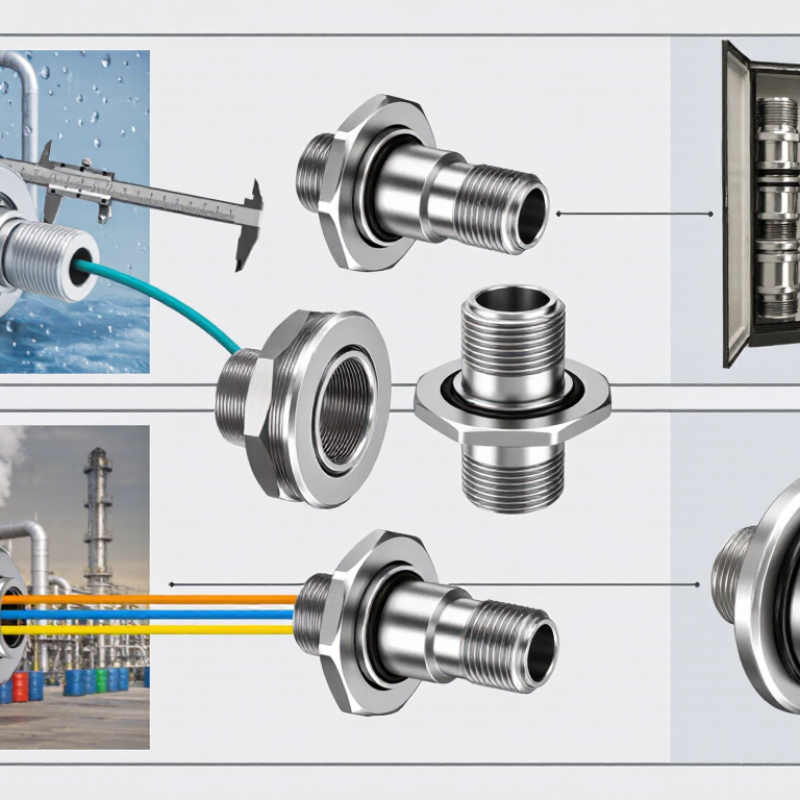
How to Choose the Right Stainless Steel Cable Gland
A stainless steel cable gland is more than a threaded entry point. It holds the cable, reduces pull on terminals, and seals the enclosure against dust and moisture. Define that role before comparing specifications. Start with the cable. In a control cabinet, the gland should keep a 12 mm cable centered while its seal compresses evenly around the jacket. Fit matters.
The requirements should match the installation, not an attractive product description. Check the cable’s outer diameter, thread type, panel thickness, temperature range, and required IP rating. For outdoor equipment, corrosion resistance and drainage design deserve close attention. Stainless steel grade also matters; 316L may suit salt-laden air better than a general stainless grade. For armoured cables, confirm armour clamping and electrical bonding requirements. In some installations, EMC continuity is essential, not optional. IEC 62444 provides useful guidance for gland selection and installation, but the equipment specification remains the controlling reference.
A practical inspection should include seal position, thread engagement, tightening method, and visible cable damage. I have seen installers choose a gland by thread size alone, then discover that the seal range was wrong. That assumption is convenient, but weak. A higher IP rating does not automatically mean better strain relief. It is easy to over-specify stainless hardware while overlooking vibration, bending radius, or maintenance access. The final choice should be recorded against measured cable dimensions and actual site conditions.
| Selection Dimension | Requirement to Define | Common Technical Values | Why It Matters | Verification Method |
|---|---|---|---|---|
| Cable outer diameter | Measure the finished cable diameter, including the outer sheath. | Select a gland whose sealing range includes the measured diameter. Example ranges may include 3–8 mm, 6–12 mm, 10–14 mm, or 13–18 mm, depending on gland size. | The sealing insert must compress evenly around the cable. An incorrect range can cause leakage, cable movement, or sheath damage. | Measure at several points with a calibrated caliper and compare the result with the manufacturer’s sealing-range data. |
| Thread type and size | Match the gland thread to the enclosure entry or cable-entry plate. | Common metric sizes include M12 × 1.5, M16 × 1.5, M20 × 1.5, M25 × 1.5, and M32 × 1.5. Other systems include NPT and PG threads. | A mismatched thread may prevent full engagement, reduce sealing performance, or damage the enclosure. | Check the enclosure drawing, thread gauge, nominal diameter, and pitch. Do not assume metric and NPT threads are interchangeable. |
| Stainless steel grade | Choose the alloy according to corrosion exposure and cleaning conditions. | 304 stainless steel is widely used for general indoor and outdoor service. 316 or 316L stainless steel provides improved resistance in chloride-containing, marine, and chemical environments. | Material selection affects service life, surface condition, maintenance frequency, and resistance to pitting corrosion. | Review the material certificate or product specification and identify exposure to salt spray, chlorides, acids, alkalis, and cleaning agents. |
| Ingress protection | Define the required protection against dust and water. | Typical requirements range from IP54 for limited dust and splash protection to IP66, IP67, or IP68 for dust-tight and high water-protection applications. The exact rating depends on the complete assembly. | The gland helps prevent moisture, dust, and contaminants from entering the enclosure through the cable entry. | Confirm that the gland, sealing washer, enclosure, and installation method are tested or rated for the required IP level under IEC 60529. |
| Operating temperature | Account for the lowest and highest temperatures at the installation location. | Many industrial cable glands are specified around −40 °C to +100 °C, while some sealing materials and designs support higher temperatures. The approved range is product-specific. | Temperature affects seal elasticity, compression, cable-jacket compatibility, and long-term mechanical performance. | Compare the gland’s rated temperature range with ambient temperature, cable temperature, heat from nearby equipment, and low-temperature startup conditions. |
| Cable retention and strain relief | Determine whether the cable will experience pulling, bending, vibration, or repeated movement. | Use a gland with an appropriate clamping design and a documented cable-retention or pull-out performance. Flexible-cable applications may require a dedicated strain-relief design. | A gland should transfer mechanical loads away from electrical terminals and prevent excessive bending at the entry point. | Check the cable construction, bending radius, vibration level, and installation orientation. Review retention-test data where available. |
| Armoured or unarmoured cable | Identify whether the cable includes metallic armour, braid, screen, or no metallic layer. | Unarmoured glands seal the outer sheath. Armoured-cable glands additionally clamp the armour and may provide bonding or earth continuity. | Using the wrong design can compromise mechanical retention, electrical bonding, and enclosure protection. | Confirm cable construction, armour dimensions, screen requirements, and the applicable electrical installation rules. |
| Seal and insert material | Match the elastomer to the cable jacket, temperature, fluids, and cleaning chemicals. | Common sealing materials include nitrile rubber, EPDM, silicone, and fluorocarbon elastomers. Chemical and temperature resistance varies by compound. | The metal body may resist corrosion while the seal fails if the elastomer is incompatible with oil, fuel, solvents, ozone, or disinfectants. | Compare the seal-material specification with the cable-jacket material and the site’s chemical exposure list. |
| Hazardous-area requirements | Determine whether flammable gas, vapour, dust, or fibres may be present. | Equipment may require certification under IEC 60079 or an applicable national hazardous-area system, with the correct protection concept and cable type. | A standard industrial gland is not automatically suitable for an explosive atmosphere. | Check the hazardous-area classification, certificate marking, permitted cable construction, installation instructions, and required accessories. |
| Earthing and electrical continuity | Define whether the gland must bond cable armour or provide screen continuity. | Bonding may require an earth tag, locknut, serrated washer, or an armour-clamping arrangement, depending on the enclosure and cable system. | Reliable bonding supports fault-current paths, electromagnetic compatibility, and personnel safety. | Follow the wiring design and measure continuity after installation where required by the applicable standard. |
| Installation space and accessories | Check clearance around the entry, enclosure-wall thickness, and access for tightening tools. | Consider locknuts, sealing washers, earth tags, reducers, adaptors, blanking plugs, and protective caps. Use a reducer or adaptor only when its ratings remain suitable. | Insufficient clearance can prevent correct tightening and cause cable bending or seal distortion. | Review the enclosure layout, entry-hole diameter, wall thickness, gland dimensions, and required tightening torque. |
| Compliance and testing | Identify the standards and approvals required for the installation. | Relevant references may include IEC 62444 for cable glands, IEC 60529 for IP classification, IEC 60079 for explosive atmospheres, and UL or national requirements where applicable. | Documented testing supports safe selection, consistent installation, and regulatory acceptance. | Request test reports, certificates, dimensional drawings, material information, and installation instructions for the exact gland configuration. |
Note: Sealing ranges, temperature limits, torque values, load ratings, and approvals vary by gland design. Always use the technical documentation for the exact size and configuration selected.
It secures the cable, reduces terminal strain, and seals the enclosure against dust and moisture. Fit matters.
Measure the cable’s outer diameter, jacket shape, and, if applicable, armour dimensions. A 12 mm cable needs an evenly compressed seal.
No. Check thread type, panel thickness, sealing range, and locknut fit together. Thread size alone is a weak shortcut.
Select the rating required by the equipment and site conditions. Higher protection is not automatically better strain relief.
No. A corrosion-resistant grade may perform better in salt-laden air. Still, dirt and trapped moisture can cause crevice corrosion.
Confirm armour clamping, electrical bonding, and reliable contact after tightening. Poor contact can remain hidden.
Check seal position, thread engagement, tightening method, and visible cable damage. Move the cable gently and inspect the seal again.
No. Review corrosion evidence, gasket temperature limits, ultraviolet exposure, and maintenance conditions. Datasheets help, but judgment is still needed.
Incorrect torque can weaken sealing or damage the cable jacket. Use a calibrated tool when possible, and record the tightening value.
Vibration, bending radius, drainage, and maintenance access are often missed. I might over-specify the metal and still miss the real problem.
Choosing the right Stainless Steel Cable Gland begins with understanding its role in securing, sealing, and protecting cables where they enter an enclosure. Start by identifying the cable type, enclosure requirements, installation location, and expected mechanical load. Then select a suitable gland material and protection grade based on exposure to moisture, dust, chemicals, corrosion, vibration, and outdoor conditions. Stainless steel is often preferred for demanding environments because of its strength and resistance to corrosion.
Correct sizing is equally important. The gland must match the cable’s outer diameter and the enclosure entry thread to provide reliable strain relief without damaging the cable. Evaluate sealing performance, operating temperature, environmental stress, and compatibility with the cable jacket. Finally, confirm that the gland and installation method meet applicable technical standards, use appropriate tools and sealing components, and allow for inspection and maintenance. A carefully selected and correctly installed gland can improve safety, prevent moisture ingress, and support dependable long-term cable performance.

 Hongxiang