Armored cable glands do more than hold a cable in place. They secure the armor, protect the cable entry, and help maintain the enclosure’s specified environmental protection. The right choice depends on the cable construction, enclosure, installation conditions, and required protection—not on appearance alone.
The International Energy Agency’s 2023 report, Electricity Grids and Secure Energy Transitions, says the world needs to add or replace 80 million kilometres of grids by 2040. That figure describes grid infrastructure, not gland sales. Still, it shows why reliable cable-entry components matter across expanding electrical systems. IEC 62444 provides requirements for cable glands, while product documentation and installation instructions help verify whether a particular gland suits the application.
Details matter. A gland that grips the outer sheath but fails to secure the armor may compromise the intended connection. Dust, moisture, vibration, and cable movement can expose weak choices. Small parts. Real consequences.
This guide compares common types, including brass and stainless-steel glands, single- and double-compression designs, and hazardous-area options. It explains where each type fits and what to check before specifying one. “Amored Cable Gland” is the keyword used here, though “armored cable gland” is the standard spelling. No verifiable quotation from a named specialist was provided, so none is attributed; inventing one would undermine the reliability this topic requires. The final selection still deserves careful review against the cable, enclosure, and manufacturer’s instructions.
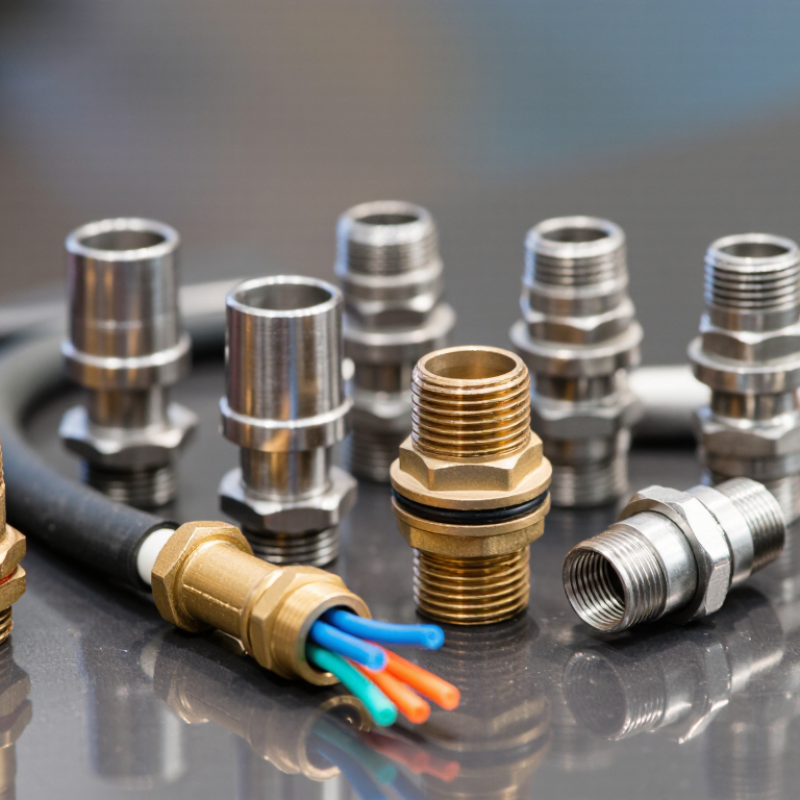
An armored cable gland is a mechanical fitting installed where an armored cable enters an electrical enclosure, junction box, or equipment housing. It grips the cable, supports its weight, and helps seal the entry against dust or moisture. Inside the gland, a clamping arrangement engages the cable’s armor, such as wire braid or steel wire. The exact design depends on the cable construction.
Some glands use single compression, while others compress both the cable’s inner bedding and outer sheath. Double-compression designs can provide a firmer grip and sealing at both layers. Other common choices include glands suited to wire-braid armor, steel-wire armor, or particular indoor and outdoor conditions. The names and details vary, so matching the gland to the cable matters more than choosing by appearance. A mismatch can leave the armor poorly clamped.
Small details matter. Check the cable’s actual diameter, armor type, and enclosure entry size before installation. A gland may also provide an earth-continuity path, but that should not be assumed from its shape alone; confirm the product specifications and installation instructions. I would not treat sealing as automatic, either. Correct assembly and the right sealing components make the difference, and this is where a quick visual check can miss a problem.
Armored cable glands secure a cable by gripping its armor, not merely tightening around the outer sheath. In a single-compression gland, the armor is clamped at one point; double-compression designs grip the armor and seal around the inner and outer sheaths. This helps resist pull, vibration, and moisture entry. The metal-to-metal contact can also provide an electrical bonding path when the gland is correctly selected and installed. Fit matters.
IEC 62444 specifies requirements and tests for cable glands, including mechanical retention and sealing. IEC 60529 defines enclosure protection ratings: IP6X means dust-tight, while IPX7 covers temporary immersion under specified test conditions, typically up to one metre for 30 minutes. These ratings apply to the tested assembly, not automatically to every gland in the field. A damaged seal, wrong cable diameter, or loose locknut can undermine protection. Real installations are less tidy than test setups.
Tips: Match the gland to the cable’s armor type, diameter, and environment. Keep the armor evenly captured, then tighten to the manufacturer’s specified torque. Check that the seal is not twisted or pinched. Small detail, big consequence. Reinspect after vibration or maintenance; a secure-looking fitting may still need attention.
Armoured cable glands are commonly distinguished by how they grip the armour and seal the cable. A single-compression gland clamps the armour and seals around the cable’s outer sheath. It is often used where the cable’s inner bedding does not need a separate seal. The correct fit depends on the cable’s measured diameter, not guesswork.
A double-compression gland adds sealing at both the outer sheath and inner bedding. Its extra compression can help limit moisture or dust entering the cable entry, especially where conditions are demanding. The parts must be assembled in the specified order. Fit matters. A poorly seated seal can undermine the protection, even when the gland appears secure.
Some designs are described by their installation setting, such as indoor or outdoor types; barrier glands provide a compound seal around conductors when the application calls for it. These categories can overlap, and labels vary. Check the cable construction, enclosure requirements, and gland instructions before choosing. In practice, product descriptions are not always perfectly clear, so confirming dimensions and sealing requirements is worthwhile.
Common designs include BW-style, CW-style, and double-compression E1W-style glands. This chart compares their typical number of cable-sheath sealing interfaces—not their IP rating or overall performance.
BW and CW glands typically provide one sheath-sealing interface, while double-compression designs typically seal both the inner and outer sheath. Exact construction and suitability depend on the gland specification and cable type.
Armored cable glands secure a cable, connect its armor to the enclosure, and help protect the entry point. BW glands are generally used indoors with steel-wire-armored cable. They grip the armor and provide electrical continuity, but do not usually seal the cable’s outer sheath against outdoor moisture. A suitable shroud may protect the exposed entry, though it does not replace a correctly rated seal.
CW glands are designed for outdoor use and seal around the cable’s outer sheath while clamping the armor. E1W glands add sealing at both the inner bedding and outer sheath. That double seal can be useful where moisture protection at both layers matters. Exact protection depends on the gland design and installation.
A2 glands are for unarmored cables. They compress onto the outer sheath, but do not clamp armor or provide armor-to-enclosure continuity. Small detail. Check the cable construction, sheath diameter, enclosure entry, and required ingress rating before choosing. A gland may look correctly fitted and still be mismatched to the cable. Verify the manufacturer’s technical data, and follow the specified assembly and tightening steps.
Armored cable glands commonly include single-compression, double-compression, barrier, and EMC types. Choose one that matches the cable’s armor construction, outer diameter, and installation environment. Single-compression glands secure the outer sheath and armor; double-compression designs grip both the outer sheath and inner bedding. Barrier glands suit installations where sealing against gas or flame passage is required. EMC glands add a conductive path for shielding. Check the cable data sheet before ordering. Armor details matter.
Then assess water, dust, corrosion, vibration, and temperature exposure. IEC 60529 defines ingress-protection codes: IP6X means dust-tight, while IPX6 covers powerful water jets. IPX8 applies to immersion under conditions agreed for the equipment, not one universal depth. Use that distinction when specifying protection. IEC 62444 provides requirements for cable glands, and IEC 60079-14 addresses electrical installations in explosive atmospheres. Verify that the gland, cable, and enclosure are compatible, and confirm the required armor clamping and bonding method. A common mistake is choosing by thread size alone. It seems minor, until the cable shifts under vibration or the seal no longer seats correctly.
A single-compression gland grips the armor and seals around the outer sheath. A double-compression type also seals around the inner bedding. More compression is not automatically better; fit still matters.
BW glands are generally used indoors with steel-wire-armored cable. They grip the armor and provide electrical continuity, but usually do not seal the outer sheath against outdoor moisture.
A CW gland is designed for outdoor use and seals around the outer sheath. An E1W adds a seal at the inner bedding. Check the required protection, not just the label.
A2 glands are intended for unarmored cables. They compress around the sheath but do not clamp armor or connect it electrically to the enclosure. Small detail, big difference.
Check the cable’s outer diameter, armor construction, and enclosure entry. Match the gland to the measured cable, not a rough estimate. I would recheck that measurement.
No. A shroud may protect an exposed entry, but it does not replace a correctly rated seal. It can look reassuring.
IP6X indicates dust-tight protection, while IPX6 covers powerful water jets. IPX8 applies to immersion under agreed equipment conditions, not one universal depth.
Incorrect assembly, a poorly seated seal, or a mismatch with the cable can reduce protection. Follow the specified assembly and tightening steps. Descriptions can be fuzzy.
An Amored Cable Gland is a fitting that connects an armored cable to electrical equipment while securing its outer sheath and armor. It helps resist cable pull, limits the entry of dust or moisture when correctly specified, and maintains a stable connection. Different designs provide different sealing and clamping arrangements, so choosing a gland involves more than matching its thread size.
BW glands are generally used for indoor applications, while CW glands are designed for outdoor conditions and provide additional environmental sealing. E1W glands use a barrier-style sealing approach and may be selected where the cable construction or installation calls for it. A2 glands are commonly intended for unarmored cables, so they should not be assumed to clamp armor. To choose the right type, consider the cable’s armor and diameter, the installation environment, the equipment entry, and the required sealing and retention.

Hongxiang