Why Use Nylon Cable Glands for Cable Protection? The answer begins with practical risk, not marketing language. A cable enters a control box, crosses a dusty workshop, and faces vibration every day. Without proper strain relief, small movements can damage insulation, loosen terminals, and invite moisture.
MarketsandMarkets estimates that the global cable glands market will grow from approximately USD 2.1 billion in 2023 to USD 3.1 billion by 2028. Its analysis links growth to industrial automation, renewable energy, and expanding electrical infrastructure. Grand View Research also identifies rising demand for organized cable management in industrial and commercial facilities. These figures show market momentum. They do not prove that every installation needs nylon.
Nylon cable glands offer several practical benefits. They are lightweight, corrosion-resistant, electrically nonconductive, and usually easier to install than metal alternatives. In a humid cabinet, their polymer body will not rust. In a crowded junction box, lower weight can reduce mechanical stress. However, ultraviolet exposure, temperature, chemical contact, and impact still require careful review. Nylon is not automatically the right answer.
Andy Billingham, a cable-accessory specialist at CMP Products, has stated, “The correct cable gland must match the cable, enclosure, and installation environment.” That principle remains easy to overlook. The IEC 62444 standard provides a useful framework for cable-gland performance, including retention and sealing considerations. A properly selected Nylon Cable Gland can protect an entry point for years. A poorly selected one can fail quietly. Even a neat installation deserves a second look.
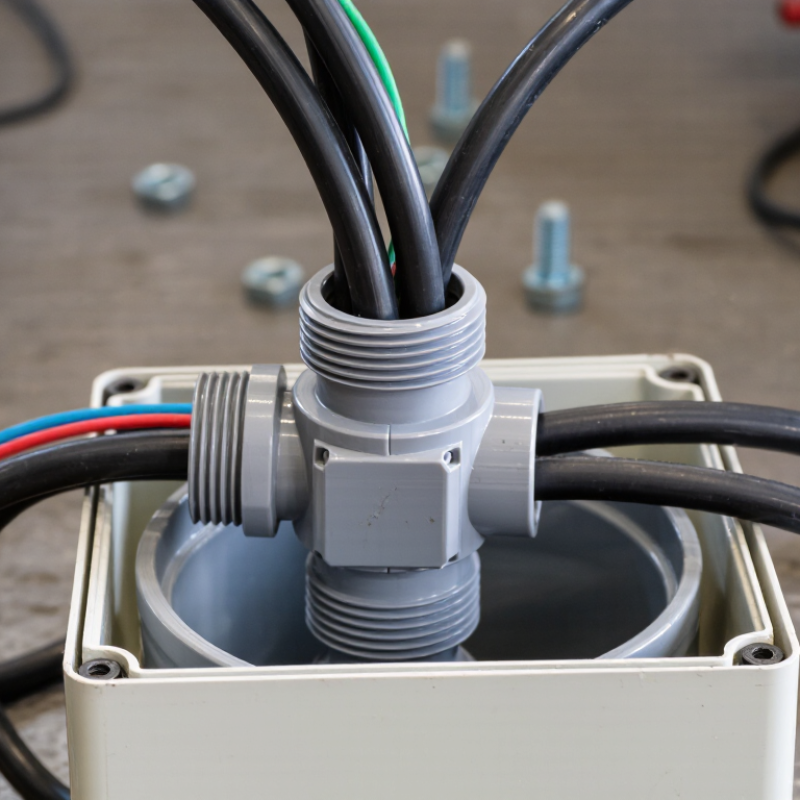
Nylon cable glands are mechanical fittings that secure cables where they enter an enclosure. A typical gland includes a threaded body, locknut, sealing ring, and compression cap. When tightened, the seal grips the cable jacket. It also limits movement and reduces strain on terminals. Most nylon glands use polyamide, commonly known as nylon 6 or nylon 6/6. They are lightweight, corrosion-resistant, and electrically nonconductive. That matters in control panels, outdoor boxes, and low-voltage equipment.
Protection depends on design, not material alone. A nylon gland rated for IP66 can resist dust and powerful water jets when correctly installed, according to the IEC 60529 classification system. IEC 62444 also defines performance requirements for cable glands, including mechanical retention and sealing behavior. The International Energy Agency’s Electricity 2024 report projected global electricity demand would rise by about 4% in 2024. More connected equipment means more cable entries to manage. Still, market growth does not prove every nylon gland is suitable.
In practice, installers should match the gland diameter to the cable’s outer jacket. A loose seal may admit moisture. Excessive tightening can damage the jacket. Temperature, ultraviolet exposure, vibration, and chemical contact also deserve attention. Nylon is often economical, but it is not automatically the strongest choice. That assumption needs review. Data from Grand View Research’s cable glands market analysis indicates steady demand through 2030, yet product selection should follow actual enclosure conditions, test ratings, and installation quality.
Nylon cable glands protect cables by controlling movement at the entry point. During installation, the gland grips the outer sheath and reduces pulling forces on internal conductors. This matters in control panels, outdoor enclosures, and machinery exposed to vibration. The International Energy Agency reported in 2023 that annual grid investment may need to exceed 600 billion US dollars by 2030. More connected equipment means more cable entries to protect.
A properly selected gland also helps block dust and water. Under IEC 60529, an IP66 enclosure resists dust ingress and powerful water jets. The gland must match that enclosure rating, cable diameter, and thread size. Too loose, and sealing fails. Too tight, and the sheath may deform. Nylon also resists corrosion, weighs less than metal, and provides useful electrical insulation. It is not magic. High heat, aggressive chemicals, or severe mechanical loads may require another material. A 2024 technical review from the International Electrotechnical Commission stresses that cable-gland performance depends on correct installation and testing, not appearance alone. In field work, this is where mistakes happen. Inspect the seal, tighten carefully, and leave no sharp bend beside the gland.
| Protection Dimension | How Nylon Cable Glands Protect Cables | Typical Performance or Application Data | Important Selection or Installation Point |
|---|---|---|---|
| Dust and water sealing | A compression seal closes the gap around the cable, while the gland body seals against the enclosure. | Suitable designs can achieve IP66, IP67, or IP68 protection when correctly assembled with compatible seals and enclosure threads. | The cable diameter, sealing ring, locknut, thread, and tightening torque must match the gland specification. |
| Strain relief | The internal clamping section grips the outer jacket and reduces pulling, bending, and twisting forces transferred to terminals. | Effective strain relief helps reduce conductor fatigue and loosening during equipment movement or routine cable handling. | Choose a gland range that securely clamps the cable jacket without crushing or cutting it. |
| Mechanical protection | The gland supports the cable at the enclosure entry and limits sharp bending at the hole edge. | The protected bend area helps prevent jacket abrasion, kinking, and damage caused by repeated movement. | Use an angled or flexible design where the cable must change direction immediately after entering the enclosure. |
| Electrical insulation | Nylon is electrically non-conductive, so the gland does not normally create a conductive path through the enclosure wall. | Useful for insulated cable entries and applications where galvanic contact or accidental continuity should be avoided. | For shielded or armored cables requiring bonding or grounding, use a gland system specifically designed for that purpose. |
| Corrosion resistance | Nylon does not rust and is not affected by the red-rust mechanism associated with ordinary steel components. | A practical option for humid rooms, light outdoor installations, and environments where corrosion-resistant entry hardware is required. | Chemical exposure, salt spray, and outdoor durability depend on the nylon grade and any included sealing materials. |
| Chemical resistance | Nylon generally resists many oils, greases, and common industrial substances better than some less-engineered plastics. | Performance varies significantly with chemical concentration, temperature, exposure time, and nylon formulation. | Check a chemical compatibility chart before use with strong acids, strong bases, solvents, or cleaning agents. |
| Temperature protection | The gland maintains sealing and clamping functions within the temperature range of its material and seal design. | Many standard nylon glands are specified for approximately -40°C to +100°C; exact limits vary by construction. | Select a high-temperature or low-temperature grade when the installation operates outside the standard range. |
| UV and weather resistance | UV-stabilized nylon can slow material degradation caused by sunlight, helping preserve mechanical strength and sealing performance. | Appropriate for outdoor use when the product is rated for UV exposure and the cable jacket is also outdoor-suitable. | Do not assume that every nylon grade is UV resistant; verify the material specification for continuous sunlight exposure. |
| Vibration and movement | The clamping mechanism stabilizes the cable and helps prevent the seal from opening during normal vibration. | Commonly used in control cabinets, machinery, lighting equipment, and electrical housings with moderate vibration. | For severe vibration or continuous flexing, use a gland and cable specifically tested for dynamic service. |
| Installation efficiency | Nylon glands are lightweight and can normally be installed with standard hand tools, reducing handling effort. | They are often selected for high-volume enclosure assembly where low weight and quick installation are important. | Avoid over-tightening, which can deform the seal or cable jacket and reduce the intended protection level. |
| Weight and cost efficiency | The low density of nylon reduces component weight and can offer a cost-effective alternative for non-grounding cable entries. | The lower mass is beneficial in portable equipment, compact control boxes, and installations with many cable entries. | Use metal glands instead when high impact strength, extreme heat resistance, EMC bonding, or cable armor termination is required. |
Note: Performance values are typical engineering ranges, not universal guarantees. The final protection level depends on the gland design, cable diameter, seal material, enclosure, thread type, installation method, and environmental conditions.
Nylon cable glands protect cables through more than simple enclosure entry. Their effectiveness comes from compression, retention, and material stability. IEC 62444:2010 covers cable-gland requirements, including mechanical performance and cable retention. In practical panel installation, the gland must grip the outer sheath without crushing it. A correctly selected sealing range reduces movement, dust entry, and moisture paths. The detail is easy to miss.
Ingress protection is another key feature. Under IEC 60529, an IP66 enclosure is dust-tight and resists powerful water jets. IP68 allows immersion, but the test depth and duration must be specified by the manufacturer. Nylon also offers low weight and useful electrical insulation. However, performance changes with temperature, ultraviolet exposure, and chemical contact. Not every nylon gland suits outdoor service. That assumption can become an expensive mistake.
Flame behavior needs careful checking. UL 94 classifies plastics through controlled burning tests, but a V-2 rating does not prove complete fire safety. It only describes specific test performance. Installation quality matters too. An over-tightened locknut may damage threads or deform the seal. An under-tightened gland may fail its stated IP rating. These small installation errors often matter more than the material name. Always match the gland’s temperature range, thread type, sealing diameter, and documented test results to the actual cable system.
Nylon cable glands are commonly used wherever cables enter electrical enclosures, control cabinets, junction boxes, or machinery. Their main job is simple: secure the cable and reduce strain at the entry point. In workshops, they protect wiring from vibration, dust, and occasional moisture. They are also useful in lighting systems, small automation panels, communication equipment, and indoor power installations.
They perform well in dry factories, commercial buildings, and protected outdoor equipment. Their light weight makes installation easier, especially when many cable entries are required. Nylon also resists corrosion, which helps in humid areas where metal fittings may deteriorate. However, nylon is not suitable for every location. High heat, strong chemicals, heavy impact, or prolonged sunlight can reduce its service life. I have seen installations fail because the gland matched the cable size, but not the environment.
Tips: Check the cable diameter before installation. Confirm the required ingress protection rating. Choose a material suited to temperature and chemical exposure. Tighten the sealing nut firmly, but avoid crushing the cable. Leave enough thread engagement inside the enclosure. A small detail matters here. Inspect the seal after maintenance, because repeated movement can loosen it. When conditions are uncertain, testing a sample assembly is wiser than relying only on a catalogue rating.
Why Use Nylon Cable Glands for Cable Protection?
Nylon cable glands protect cable entries from dust, moisture, vibration, and accidental pulling. Their lightweight construction suits control panels, junction boxes, and outdoor equipment. They also resist corrosion, which is useful in damp or chemically exposed areas. However, nylon is not ideal for every installation. High heat, severe impact, or strong chemical exposure may require another material.
How Should Nylon Cable Glands Be Selected and Installed?
Select a gland by checking the cable’s outer diameter, thread size, sealing range, and required ingress protection. The gland should grip the cable firmly without crushing its insulation. Confirm the operating temperature and enclosure material before purchase. A small mismatch can cause water entry later. This detail is easy to overlook.
During installation, make a clean entry hole and remove sharp edges. Fit the locknut and sealing washer correctly, then tighten the gland evenly. Do not over-tighten it. Excessive force may deform the seal or damage the enclosure. After tightening, pull the cable gently to check strain relief. Inspect the seal after the panel has been moved or exposed to vibration.
Tips: Keep the cable diameter within the gland’s marked range. Use a torque tool when the manufacturer provides a value. Leave enough cable length for future maintenance. Recheck the entry after heavy rain or equipment relocation. Perfect installation is not always achieved on the first attempt, so inspection matters.
It is a mechanical fitting for securing cables where they enter an enclosure. It usually includes a threaded body, locknut, sealing ring, and compression cap.
Tightening the cap compresses the seal around the cable jacket. This limits movement, reduces strain, and helps block dust or moisture.
Nylon is lightweight, corrosion-resistant, and electrically nonconductive. These qualities suit control panels, outdoor boxes, and low-voltage equipment.
No. Protection depends on design, installation, and tested ratings. A correctly installed IP66 gland can resist dust and powerful water jets.
Match the sealing range to the cable’s outside jacket diameter. A loose fit may admit water. Too much tightening can damage the jacket.
They can, but outdoor conditions require careful checking. Review ultraviolet exposure, temperature changes, vibration, and chemical contact. Not every nylon gland suits continuous outdoor service.
IP66 indicates dust-tight protection and resistance to powerful water jets. IP68 indicates immersion protection, but depth and duration must be confirmed.
Yes. An under-tightened gland may lose its stated IP rating. An over-tightened locknut can deform the seal or damage threads. Small errors matter.
No. A plastic flame rating describes controlled test performance only. It does not guarantee complete fire safety in every installation.
Check the temperature range, thread type, sealing diameter, and test documentation. Also consider the actual enclosure environment. The material name alone is not enough.
Nylon cable glands are lightweight cable-management components designed to secure cables where they enter enclosures, control boxes, and electrical equipment. A Nylon Cable Gland typically combines a threaded body, sealing ring, and tightening nut to hold a cable firmly while helping prevent dust, moisture, vibration, and accidental pulling from affecting the connection. Its nonmetallic construction also offers good insulation, corrosion resistance, and easy handling, making it suitable for many general electrical and industrial applications.
The effectiveness of nylon cable glands comes from their reliable strain relief, adaptable sealing performance, and resistance to common environmental conditions. They are often used in automation systems, lighting equipment, communication devices, outdoor enclosures, and machinery. When selecting one, users should match the gland size and thread type to the cable and enclosure, while also considering temperature, exposure, and required protection level. Proper installation involves creating a suitable entry hole, inserting the cable without damaging its jacket, and tightening the gland evenly to form a secure seal without excessive pressure.

Hongxiang