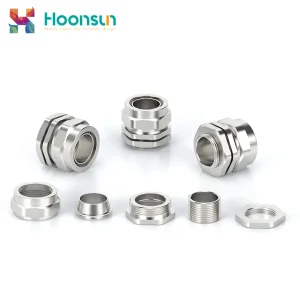
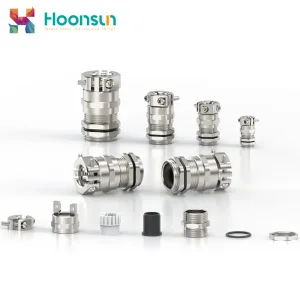
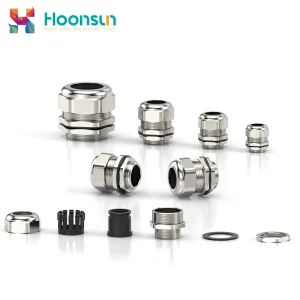
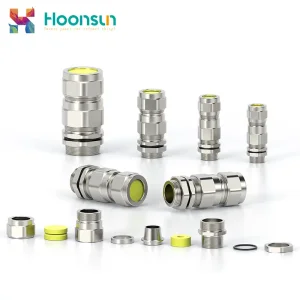
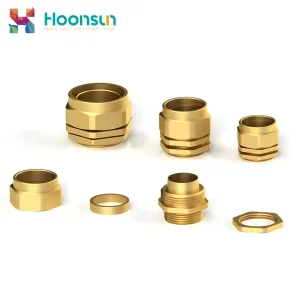
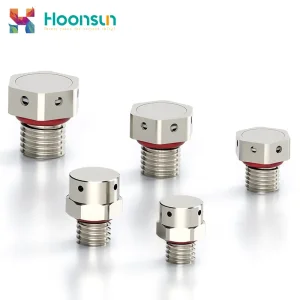
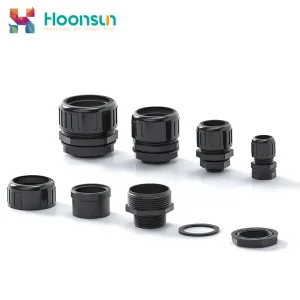
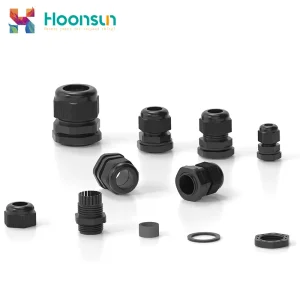
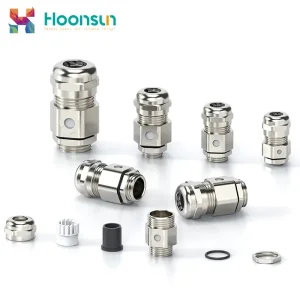
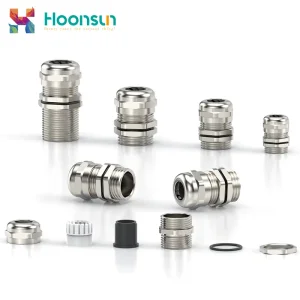
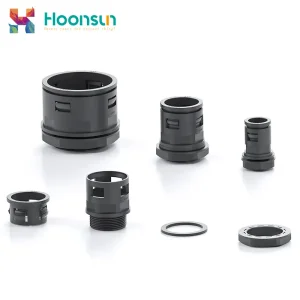
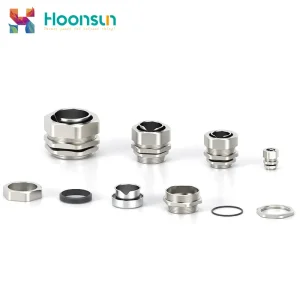
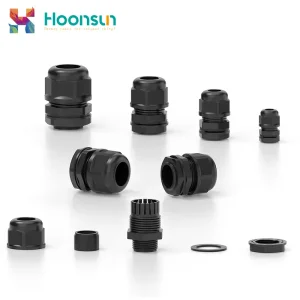
In the modern industrial landscape, cable glands are no longer just passive components. They are the critical frontline defense for data integrity and power stability. As global manufacturing shifts toward high-efficiency, thermally demanding environments—such as New Energy Vehicle (NEV) battery modules, wind turbine nacelles, and automated robotic systems—the requirement for high-temperature and ingress-protected (IP68) cable glands has surged.
China has transitioned from a volume-based supplier to an innovation-led manufacturing powerhouse. The integration of IATF16949 standards and sophisticated R&D hubs (such as those in Zhejiang) has allowed Chinese factories to master advanced metallurgy and polymer science. By controlling the entire supply chain, from raw material procurement to CNC precision machining, manufacturers like Hongxiang Connector offer an Information Gain advantage: deep insights into material performance under thermal cycling that Western procurement teams rely on for cost-effective, high-reliability engineering.
Founded in 2006, Zhejiang Hongxiang Connector Co., Ltd. is rooted in Yueqing, Zhejiang — a national hub for precision electrical manufacturing in China. After nearly two decades of dedicated development, the company has evolved into a large modern industrial connectivity solutions provider integrating R&D and design, large-scale intelligent manufacturing, global sales, and one-stop services. It stands as a benchmark enterprise of considerable scale and influence in China’s cable gland and connector industry, and a key player among national high-tech enterprises.
Boasting a modern intelligent manufacturing industrial park, the company operates a standardized production workshop of over 10,000 square meters, equipped with multiple high-precision automated production lines, CNC machining centers, and a full-process quality control laboratory. With a core team of more than 300 professionals — over 30% of whom are R&D and quality management personnel — its annual production capacity exceeds 80 million units.
Cable glands protect power, signal, and communication cables in high-voltage battery packs, ensuring safety against vibration, extreme temperatures, and moisture. Compliance with automotive standards is non-negotiable.
Essential for industrial robots and AMRs, these glands manage dynamic movement and mechanical stress while maintaining IP68 seals against dust, coolants, and chemicals.
Engineered for offshore and onshore turbines, these components resist salt fog, UV, and temperatures from -52℃ to 90℃, protecting critical power infrastructure in harsh climates.
Used in high-speed rail and metros, these glands offer explosion-proof performance and vibration resistance, ensuring cable integrity across wide temperature variations (-40℃ to 90℃).
A: Chinese suppliers have achieved parity with international standards (UL, CE, ATEX) while maintaining a significant cost-to-performance ratio. Through vertical integration, they can offer rapid customization for specific project needs, often outperforming legacy suppliers in lead-time efficiency.
A: IP68 ensures the connector can withstand dust ingress and continuous immersion in water. In industrial applications, this is the first line of defense against mechanical failure caused by environmental contamination.
A: Look for ISO9001 and IATF16949 certifications. These signify a commitment to stringent process control, ensuring that every batch of cable glands maintains consistent quality, essential for high-stakes projects like rail or energy infrastructure.
 Hongxiang